Translated with AI from the Russian original.
In the coming years, about 1 billion lari will be invested in the development of Georgian Railways. This was announced by the Minister of Economy of Georgia, Mariam Kvrivishvili, on Public Television, noting that the corresponding decision has already been made by the government. The investments will be directed to strengthening the country's transit potential and increasing the competitiveness of the Georgian transport infrastructure.
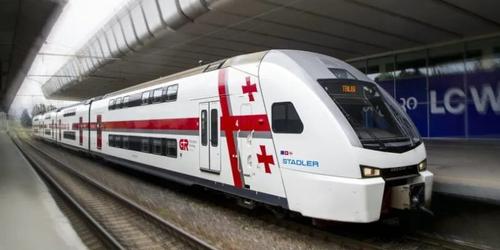
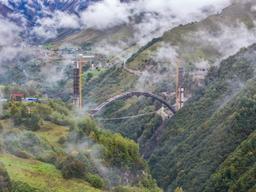
According to the minister, the growth of global cargo turnover requires Georgia to take active steps to maintain its role as a reliable transit partner. The investment program includes the development of railway infrastructure, as well as the renewal and expansion of the locomotive fleet. Kvrivishvili emphasized that the railway modernization project has already been completed, and its implementation has doubled the network's capacity.
In addition, the opening of the Baku-Tbilisi-Kars railway line is expected in the near future, which the government calls a historical project for the entire region - Azerbaijan, Georgia, and Turkey. In parallel, Georgian Railways plans to purchase 120 gondola cars, for which a tender of 20 million lari has been announced. The draft budget for 2026 also provides for attracting credit lines of 162.5 million lari from the Asian Development Bank and the World Bank as part of the railway sector reform.